Mathaf: The Making of a Museum
 Mathaf: The Making of a Museum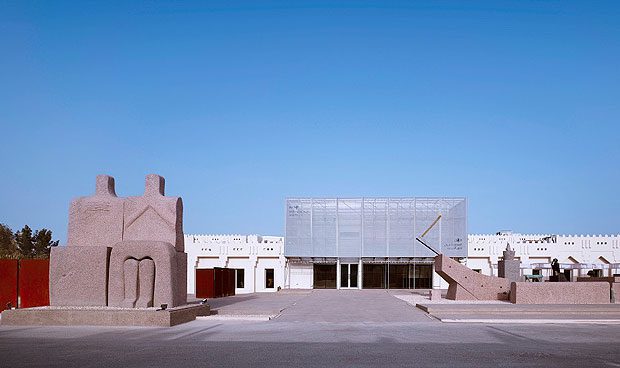
Mathaf: Arab Museum of Modern Art in Doha was founded in 2010 with a collection of works provided by Sheikh Hassan bin Mohammed bin Ali Al Thani. Mathaf, which simply means ‘museum’ in Arabic, boasts a collection of 9,000 works spanning from the mid-19th century to the present day. Mathaf presents an Arab perspective on modern art and contemporary art, reflecting the shared history of the Arab world by contemporary artists and fulfils the need for modern culture to be promoted as a force that shapes society and progresses it forward. The museum was built to be a point of intersection for Arab creativities through the works of art collected and displayed, whereby visitors are interacting with artists’ works that seek to influence, impact, and communicate with their contemporaries about issues that are of lasting importance.
Mathaf is the first of its kind in Qatar. It owes its origins to the great love of modern art nurtured in the heart of its founder, Sheikh Hassan Al Thani. The purpose of the modern art museum is to foster creativity, promote dialogue and inspire new ideas about modern and contemporary Arab art. Since museums are cultural institutions that adjust to the changing needs of their audiences and recognise the factors that influence visitation rates in order to attract, engage, and maintain their visitors, Mathaf presents itself as a cultural force in the 21st century, standing at the forefront of Qatari society and the Arab world as a promoter of cultural ideals, expressions, and artistic empowerment. The building itself is a celebration of high-mindedness and education. Situated in a renovated and architecturally transformed school by Jean-François Bodin, a French architect with limited international notoriety in comparison with Jean Nouvel (architect of the National Museum of Qatar) or I. M. Pei (architect of the Museum of Islamic Art), in Doha’s Education City. Mathaf serves as a remarkable example of recycled architecture that purposefully complements the building’s former identity as a space for learning and exploration. Even though the building is only designed to be a temporary house for the museum, it is a worthy home for the collection.
The museum continues to collect and display works that aid in the construction of a new Arab identity that is also couched in pre-independent Qatar. The bridge between the two is Qatar, which gained its independence in 1971. Its many development projects and cultural programs help to keep this identity moving in a positive direction while simultaneously opening a door to dialogue with other cultures. For instance, this kind of disciplinary collecting of Islamic and Western art reflects an exposure to the museums and art markets of Europe and the U.S., and articulates an engagement with global, or ‘universal’, value systems, aesthetics and discourses of knowledge. Yet while Mathaf is certainly a new kind of museum, the act of collecting and displaying is not new in the Gulf region. For example, the personal private collection of Sheikh Faisal bin Qassim al-Thani opened in 1998 near Doha, and showcased many works. What makes Mathaf unique, however, is Sheikh Hassan’s own personal relationship with the museum and his own authoritative stake in its collections.
Sheikh Hassan, a member of the ruling family, was born into one of the two branches of the ruling family that had access to power in the 20th century. He is the grandson of Ali bin ‘Abd Allah Al-Thani, ruler from 1949 to 1960. He is also the nephew of his successor Ahmad, overthrown in 1972 by Khalifa. This privileged position within the ruling family has resulted in early access to education, travel and art. In the 1980s, Sheikh Hassan commenced his studies at Qatar University, majoring in History, where he also took a course in Art History taught by Qatari artist, Youssef Ahmed. From that course, Sheikh Hassan was introduced to Arab art. Sheikh Hassan’s education played a decisive role in the choice of collection that he decided to form later. His interest in history is reflected in the purchase of books and manuscripts, old weapons and oriental paintings. By meeting Yousef Ahmed, a collection of modern Arab art was born, which in 2010 became the largest in the world. These collections were installed in private museums. In 1994, the collection of weapons was installed in two adjoining villas of the Sheikh, transformed into the Museum of Arms. The same year, in two other adjoining villas of his properties, located in Madinat Khalifa, Sheikh Hassan opened a museum dedicated to modern Arab art, which was transformed fifteen years later to Mathaf as a public museum in Education City. And in 1995, he launched a program of artist residencies, most of which benefited Iraqi artists facing economic and political difficulties in Iraq due to the war. Hence, Sheikh Hassan continued to acquire works from resident artists and from his wider network of artists in the Arab world, which helped his collection to grow. In 2004, the collection of 6,000-plus artworks was donated to Qatar Foundation, as well as his collection of ancient books and manuscripts, now acquired by Qatar National Library. Sheikh Hassan made a proposal to the Chair of the Qatar Foundation, Sheikha Mozan bint Nasser Al Missned, to adopt his private museum to the public. Under Qatar Foundation, Mathaf was inaugurated in December 2010, the cost of which has been supported since by Qatar Museums Authority (QMA).
Mathaf’s main inspiration has been Sheikh Hassan all along. Curating Arab modernity has therefore begun with Sheikh Hassan, whose acquisitions were inspired from the beginning by an insatiable curiosity. Sheikh Hassan’s passion was driven by the question of knowing what place Arab artists had in the story of modern art. Sheik Hassan befriended many artists in Qatar and in other countries in West Asia and North Africa. He made his first purchases in 1986 at an exhibit in Doha: they were works by his artist friend Yousef Ahmed as well as other Qatari artists. Sheikh Hassan did not want to limit his collection to Qatari artists, however, and so with the help of Youssef Ahmed he broadened his scope, met new artists from other countries, and began to cultivate his collection in earnest.
The three exhibits that inaugurated the museum were: Sajjil: A Century of Modern Art, Interventions: A Dialogue Between the Modern and the Contemporary, and Told/Untold/Retold: 23 Stories of Journeys through Time and Place. Each of these exhibits introduces a comprehensive survey of art and artists from the Arab world. It is evident that Sheikh Hassan’s aim in opening these works of art to the public was to embrace the rich culture and heritage of the Arab people and display it for the modern world in a modern setting.
Curating Arab modernity at Mathaf begins therefore with Sheikh Hassan’s foray into collecting works of art from living Arab artists. As Shabout, al-Khudhairi and Chalabi note in Sajjil catalogue (2010), Mathaf presents a narrative of possibilities that tells one story of the formation and development of modern art in the Arab world. What the first exhibit Sajjil did for Mathaf was to perform the act of recording the works and experiences, and of restoring the agency to the artists and their negotiations of making culture and history. In other words, the act of curating in Mathaf is more about the act of giving voice back to the artist and allowing the modern Arab artist the opportunity to speak for the Arab people, for their experiences, their present, their past, and their future.
This exhibition dwelled in twelve galleries split into ten groupings to illustrate the different themes: Nature, City, Individualism, Form & Abstraction, Society, Family, History and Myth, Struggle, Huroufiyah, and Doha Gallery. As Shabout, al-Khudhairi and Chalabi note in the catalogue (2010), Doha, Qatar, is part of the new Arab world and is playing an important role in shaping the identity of the Arab world in the 21st century. What is significant about this role is that the identity that is being cultivated in Doha does not conform to secularised newly independent Arab countries, such as Egypt and Iraq, of the middle of the twentieth century. Mathaf comes into play as expressing a vision that is at once regional but also global in its modernity. It embraces an ideal that is no longer popular in contemporary rhetoric on art, but nevertheless essential to its understanding, namely, ‘cultural Arabism’. In other words, Mathaf bridges the old and the new.
The Sajjil exhibit was designed to illustrate the depth of the Mathaf collection and consisted of 200 paintings, sculptures and other works, the purpose being to historicize the modern art movement in the Arab region. The works were selected by Shabout, al-Khudhairi and Chelabi—respected scholars of the modern Arab art world. The knowledge of modern Arab art was foregrounded by including works such as that of Turkish-born Iraqi artist Jewad Selim, who founded the Baghdad Modern Art Group, Turkish-born Fahrelnissa Zeid who formed the Fahrelnissa Zeid Institute of Fine Arts in Amman, and Syrian artist Madiha Umar, who joined Baghdad’s One Dimension Group, which radically explored and expressed Arab calligraphy in abstract works. While Sajjil demonstrated an example of the expanse of modern Arab art, it was still somewhat constrained by the limits of the collection of Sheikh Hassan. And though it did not provide much of a glimpse into Egyptian artists, who did help to develop modern art in North Africa, after all, the museum is really a celebration of the Qatari notion of Arab art. Yet, it did not project a narrative that is forceful and compelling. For example, the section of the exhibit called Huroufiyah exhibited the experimentation of the Arabic text and lettering, which is a thematic structure that captured the bridging of the traditional and modern. The works by Hassan Sharif entitled City (1981) showed a black-and-white etching of Arabic text and numbers within an abstract urban façade, which perfectly encapsulated the contemporary take on what is considered traditional.
Selecting the works for Sajjil therefore depended on the curators’ ability to transcend the obstacles of inclusivity in the modern Arab world and embrace the challenge that diversity of experience heralds. Shabout, al-Khudhairi and Chalabi noted that one particular challenge of translation versus transliterations of artists’ names in accordance with new postmodernist theories was further complicated by the plethora of misspellings in English and French found all over the Internet today. A system of consolidating the different spellings to ultimately create a record of reference was researched and devised, based on the artist’s preferred spelling when information is available, or most commonly used otherwise. Respect for the artist, the artist’s preferences, and the artists’ vision is what drives the curating at Mathaf.
The Interventions exhibit was curated by Shabout as well and consisted mainly of sculptures with a few paintings. One such painting touched on the violence in West Asia in recent years and was titled Victim’s Rose (2010) by Dia Azzawi. This abstract painting was filled with bullet holes to express the way that Iraq, the native place of the artist, had been riddled with bullet holes following the fall of Saddam Hussein. Other works echoed this sentiment and gave this exhibit a mournful and melancholy feeling.
Told/Untold/Retold curated by Sam Bardaouil and Till Fellrath also meant to capture the spirit of the times. The exhibit focused on the forced migration within the 22 Arab states due to war and unrest: the large sculptures tread a very fine line between the playful and the menacing. This contemporary exhibit served to highlight the problems that the Arab world continues to face and it served to give voice to the struggles of the Arab world as the region and homeland is invaded and overthrown by external forces exercising geopolitical aims that do not correlate with the objectives of the native Arab population—and so violence is often the result, and forced migration is the outcome. For the museum to display these haunting works is to give voice to the region’s major issues and remind the visitors to come together as a community, embrace one another and be mindful of the cultural heritage that the Arab people possess even in times of severe difficulty.
For the past ten years, Mathaf created an environment where there is an urgent need to allow for new understandings of the visual production within its historical contexts, but also the need to contribute to renegotiating Arabs’ positions to and in modernity. Curating the museum’s collection is a challenge because of the inherent subjectivity of collecting that can be operated as a kind of confirmation bias on the part of the curators: in other words, what is being displayed in the museum? Is it the work that is meant to be representative of modern art from the Arab world? Is the perspective on modern art, par excellence, always from an Arab perspective as the museum’s name suggests? The latter is very debatable. Nonetheless, Mathaf stands out as a leading institution in the field, a place for knowledge production, playing an active role in shaping and responding to the cultural landscape of Qatar, the region, and the world.