ARTISTS BIOGRAPHIES
 ARTISTS BIOGRAPHIES
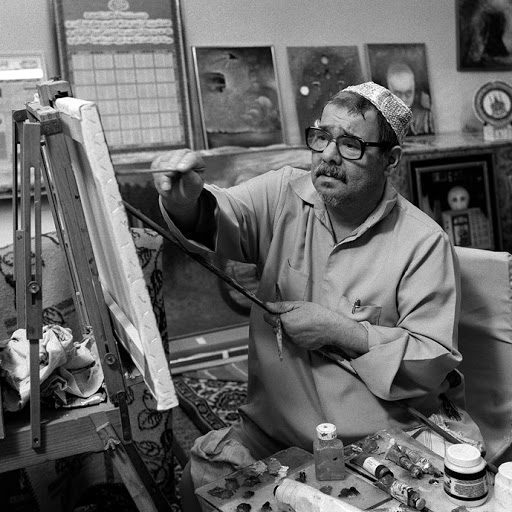
Khalifa Al Qattan
—
Date:
05 October, 2023
BY
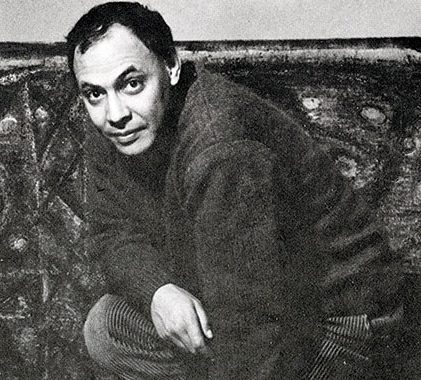
Khalifa Al Qattan was born in January 1934 in Old Kuwait City; and passed away on 27 July 2003. A pioneering Kuwaiti artist, he was a painter and creator of a style he coined ‘Circulism’ dating back to 1962. According to Al Qattan, everything begins from a single point moving and spiraling into a circular and spherical motion concluding at the same point where it began. His approach was based on philosophy, science, and spirituality, which he became renowned for.
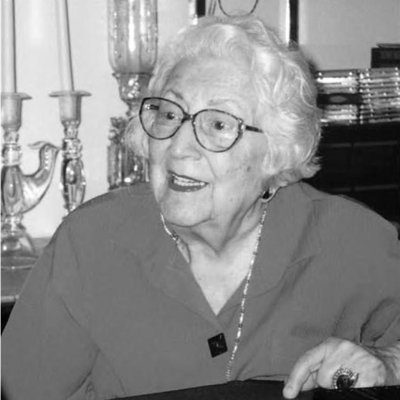
He was born during the “Haddamah-Destruction” year in which many traditional Kuwaiti mud houses were demolished due to the heavy rains of winter. Encouraged by his school teacher, Al Qattan was drawing and sketching scenes from everyday life and worked as a teacher from the very young age of 15 at the Najah school, teaching Art amongst other subjects. He was the very first Kuwaiti artist to hold a solo exhibition in Kuwait in 1953, after which he pursued his undergraduate studies on a national scholarship in the UK. Al Qattan was formally trained in woodworking and engineering at the Leicester College of Art and Technology, before meeting his wife Lidia Al Qattan (née Giuseppe Scagnolari) at college and marrying her in Kuwait in 1960. He graduated in 1958 with honours, and returned to Kuwait to work as an engineer and a foreman for the Ministry of General Works, as well as a Teacher at the Shuwaikh University. He also attended the Free Atelier in Kuwait, which is a historical place for the first Kuwaiti Art movements. Subsequently, Al Qattan exhibited his work extensively from 1962 onwards, locally, regionally, and internationally. He also established the Kuwaiti Biennale, in 1969, and contributed to many art initiatives in Kuwait.
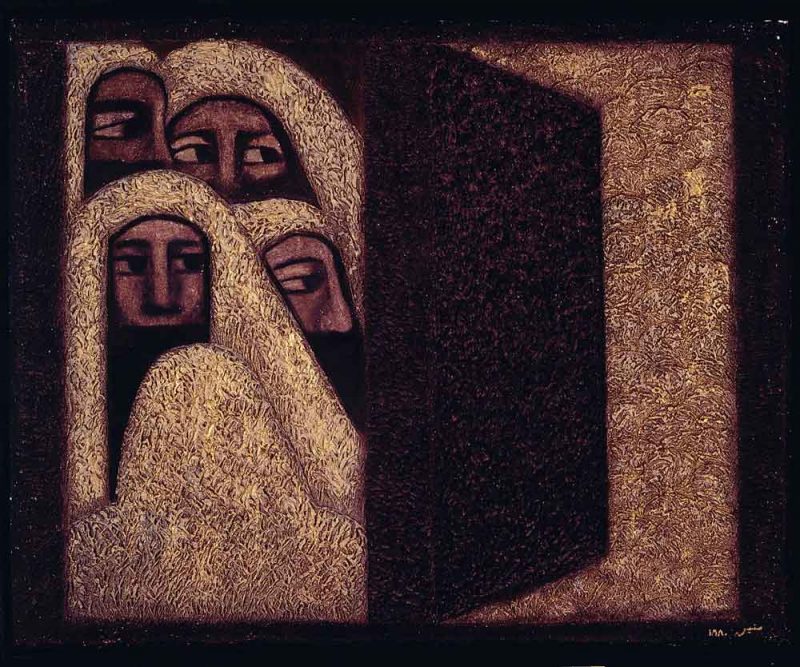
His body of work consists of oil paintings and watercolours. At first, he adapted a cubist style to express drama and tragedy in his paintings. Soon after, his unique style evolved into ‘Circulism’ which he became known for with a strong tendency for human drama. His wife wrote about his work in her text ‘Circulism and Life’ published in circa 1969. As such, he received the media’s attention and the term Aldaayiria (Circulism) became synonymous with Khalifa Al Qattan in Kuwait. He held many daring solo exhibitions where he presented a number of paintings conceived under the theme of ‘The Apple’, ‘The Egg’, and ‘Women I Saw’ that evoked the characteristics of the Kuwaiti society in a dramatic light. Tackling subjects such as sex was a controversial choice, but his philosophical approach made it acceptable by the public. In the 1980’s, he produced many paintings that the artist believed predicted the Iraqi invasion of Kuwait in 1990. After the liberation of Kuwait in February 1991, Al Qattan produced work reminiscent of circulism as a way of healing from the tragedy he lived through during the Iraqi invasion (1990-1991).
Al Qattan was named the president of Kuwait Arts Association in 1976, and received many awards and recognitions from Kuwait and abroad from the Ministry of Culture of the People’s Republic of China in 1981, and from the ruler of Sharjah Dr. Sultan bin Muhammad Al-Qasimi in 1993. His work was exhibited regionally and internationally in Italy, Cairo, London, Beirut, Khafji, Pekin, Baghdad, Tunis, Paris, and Frankfurt.