 In Conversation with Héla Ammar
 In Conversation with Héla Ammar
Interview
BY
Wadha Al-Aqeedi
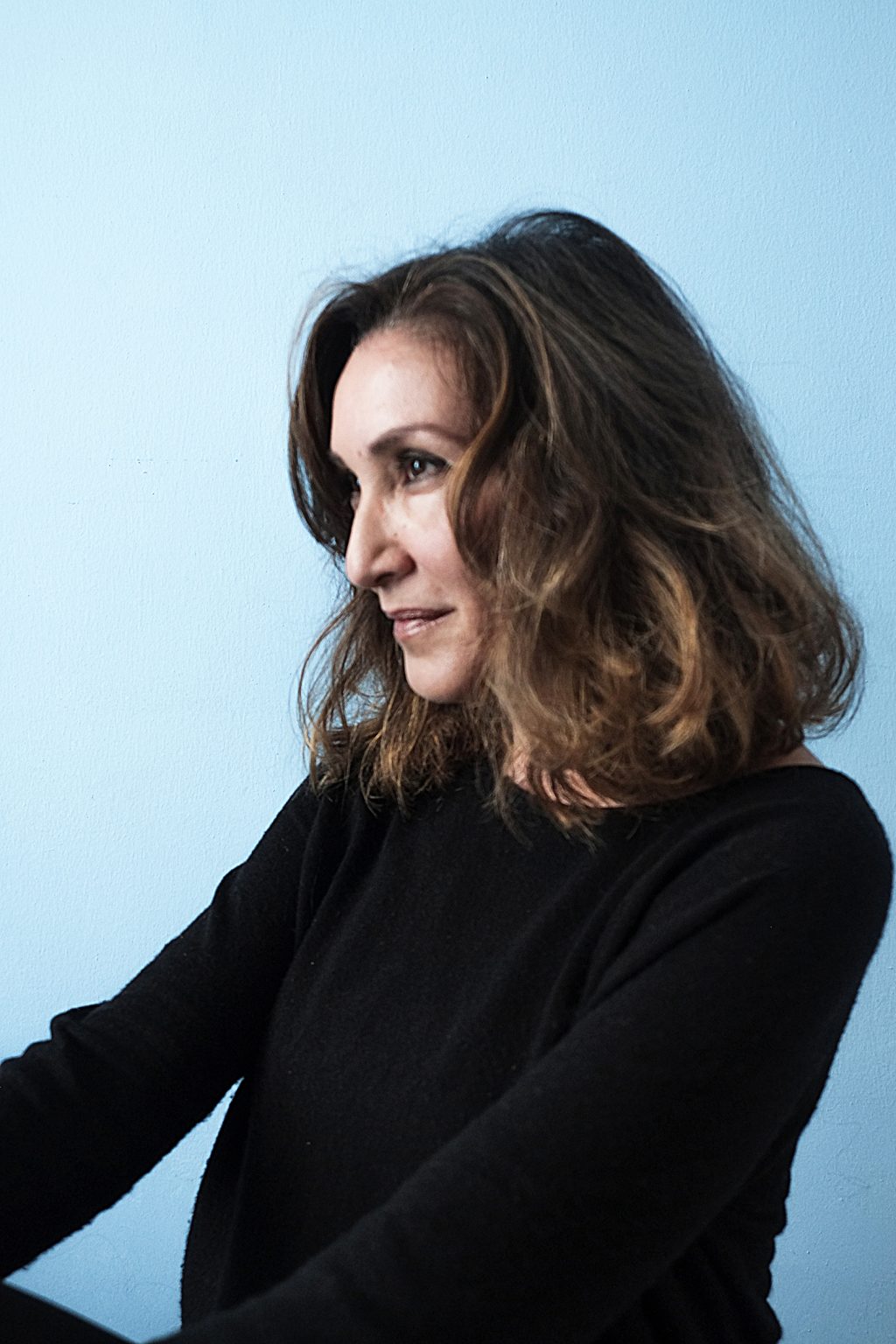
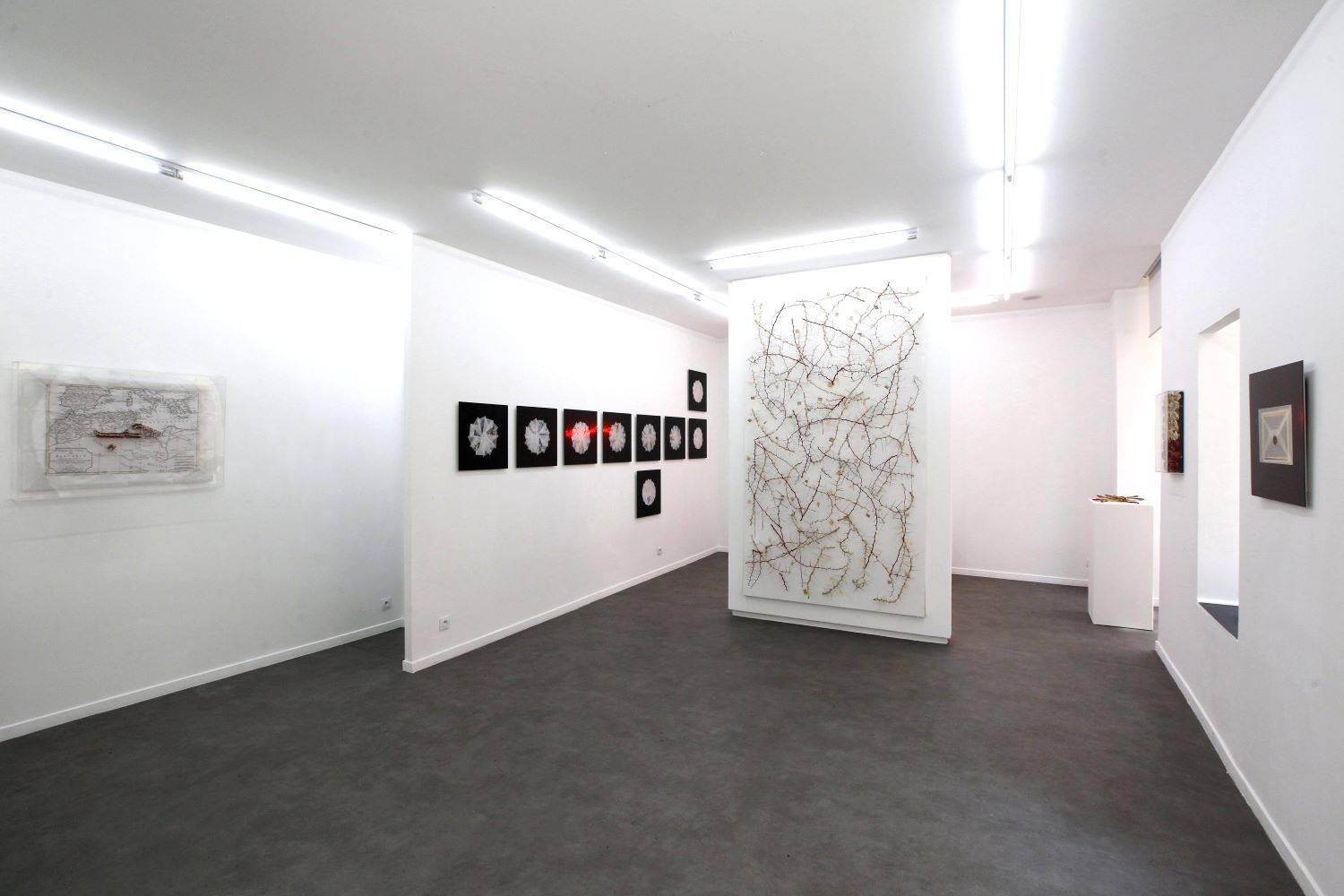
Héla Ammar (Tunisian, b. 1969) presents her solo exhibition titled Love Letters at La La Lande Gallery in Paris, curated by Armelle Dakouo. By weaving together collective memories and personal stories, the new body of work (2020-2022) serves as a reconstruction of a fragmented collective memory and contributes to reconstituting both national and family archives to reflect on the history of her native Tunisia. Ammar’s work is held in the collections of, and has been exhibited at, the British Museum (London), l’Institut du monde arabe (Paris), la Fondation du Musée Slaoui (Casablanca), and la Fondation Kamel Lazaar (Tunis).
Wadha Al-Aqeedi: Could you introduce yourself to our readers?
Héla Ammar: My name is Héla, I’m a Tunisian visual artist, living and working in Tunisia. I had many exhibitions around the world, and this is my first solo exhibition with La La Lande gallery in Paris.
WA: Let’s begin with your recent body of work, the series on love letters. The series began in 2020-2022; what prompted it?
HA: Actually, this body of work started with a very personal story. It’s the story of my grandparents and their love story. My grandfather was the eldest son of a nationalist man who worked on freeing Tunisia from the French colony. He also founded the first republican party in Tunisia. And his son, my grandfather, was engaged to a Tunisian woman. At the same time, my grandfather met a French woman and fell in love with her despite the will of his father. This is an important thing to say: Back then, polygamy was allowed in Tunisia and later it became forbidden. So he married both a Tunisian and a French woman, and they lived together in the same house and had four children and many grandchildren. They lived happily, and I was raised by these two women and grew up with two cultures, French and Tunisian. The idea of this body of work came from this personal story, where I wanted to deal with the memory archive, but also the link between two cultures and two countries: Former colonised and former coloniser. So, this is the main topic of this exhibition.
WA: Can you tell us more about the memory archives? Are they personal or are they derived from official archives?
HA: I used to work with formal archives, official and political ones, but also familial ones. But when I started working with archives, I found that most of them were missing or destroyed. So, I was confronted by this difficulty of finding archives to tell stories. I continued my search for materials to work with from my family and private funds, but also from the internet and everywhere actually. The driving question for me was: “If there is no archive, how can I tell my story? How can I tell the history of Tunisia and my history?”. So, I somehow started “inventing” archives and putting what I found together. But I primarily used the lack of archives as an archive.
WA: I think it’s common to confront this difficulty to trace archives, either because they were destroyed or because they’ve never existed. From my observation, we kind of resort to oral histories that are transmitted through generations. In a way, they become an intangible family archive.
HA: Yes, exactly. Through the process, I collected some oral histories from my mother and other members of my family regarding the Tunisian history, etc. But I didn’t show them as they are, I rather translated them as artworks based on what I heard from my family.
WA: In respect of archives, I would like to explore with you how archives are defined and when do they materialise into archives? Considering that we live in an age where we are constantly documenting and recording, do these elements constitute what later become an archive?
HA: I asked myself this question. I think that there are two types of archives: the formal one, which consists of official documents used by historians, anthropologists, scientists, etc.; and there are also archives used by artists, the same ones, sometimes, but also invented by artists. We can call them “sensitive archives”, or “archives sensibles” in French. The difference between the first and the second is that the first is formal and objective, while the second type is subjective. I started from formal archives, but through them, I told a subjective story. It’s something very disruptive, meaning that it’s not the opposite of the formal story, but there is a kind of subjectivity that is more intimate and sensitive than the objective narratives drawn from the formal archives. To answer the second part of the question, I think that yes, maybe in the future–while documenting social and political topics such as prisons, human rights, the LGBTQ+ community in Tunisia–there will be archives somehow, or at least traces from the present.
WA: Your use of mediums varies in photography, embroidery, installation, and archive. At the same time, you employ an intricate technique of layering and texturing. How have you developed your technique? And what could this technique tell us about your artistic preoccupation?
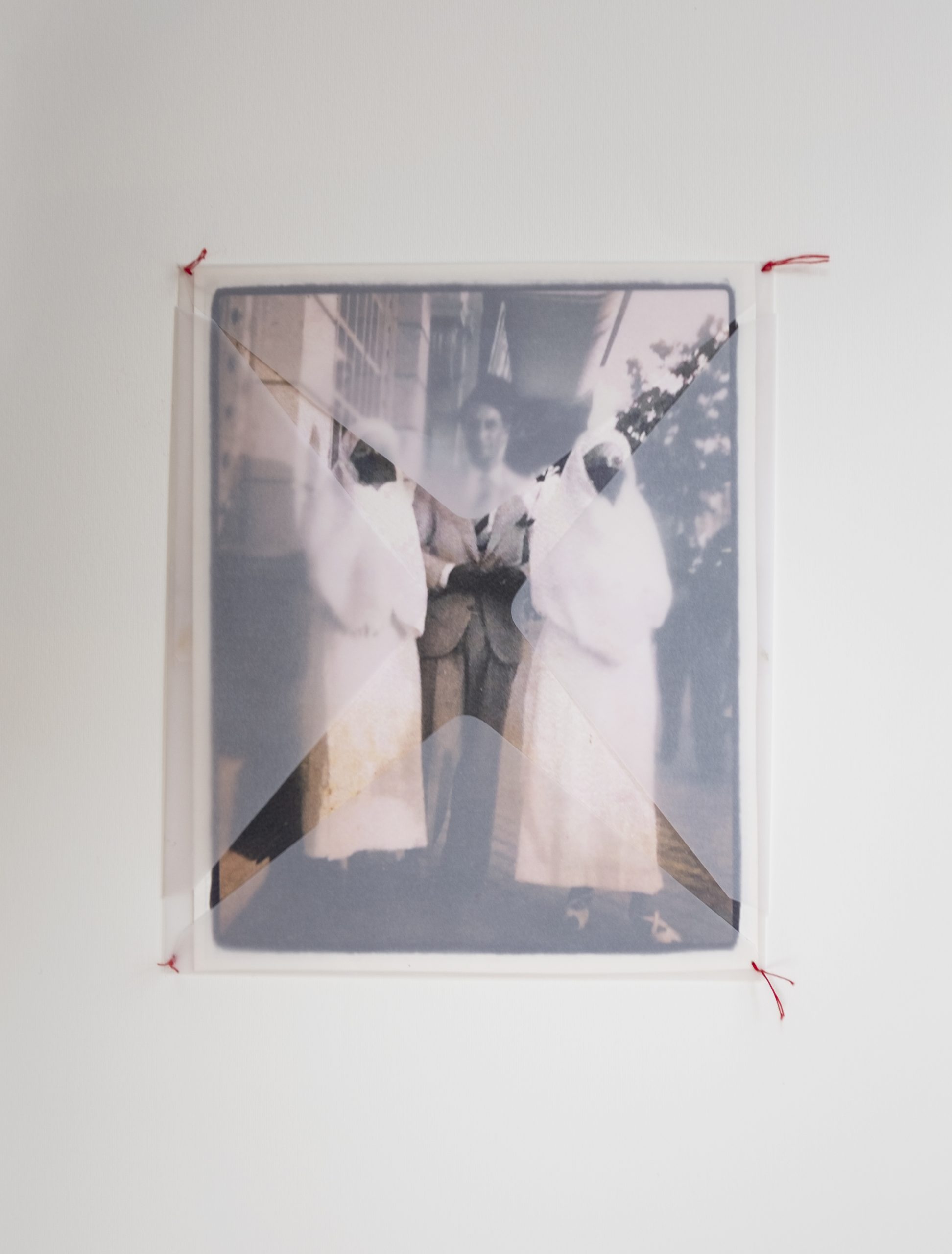
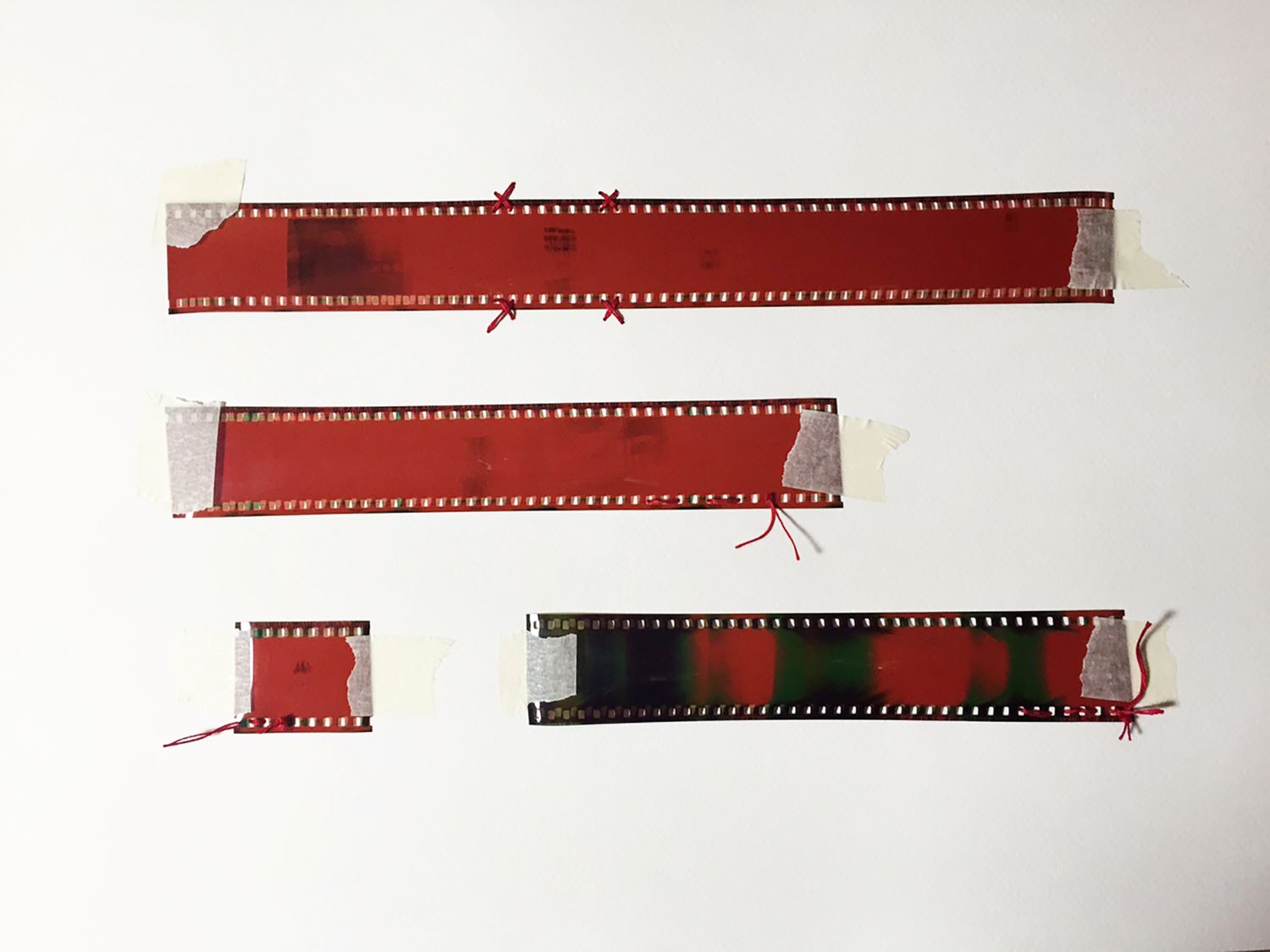
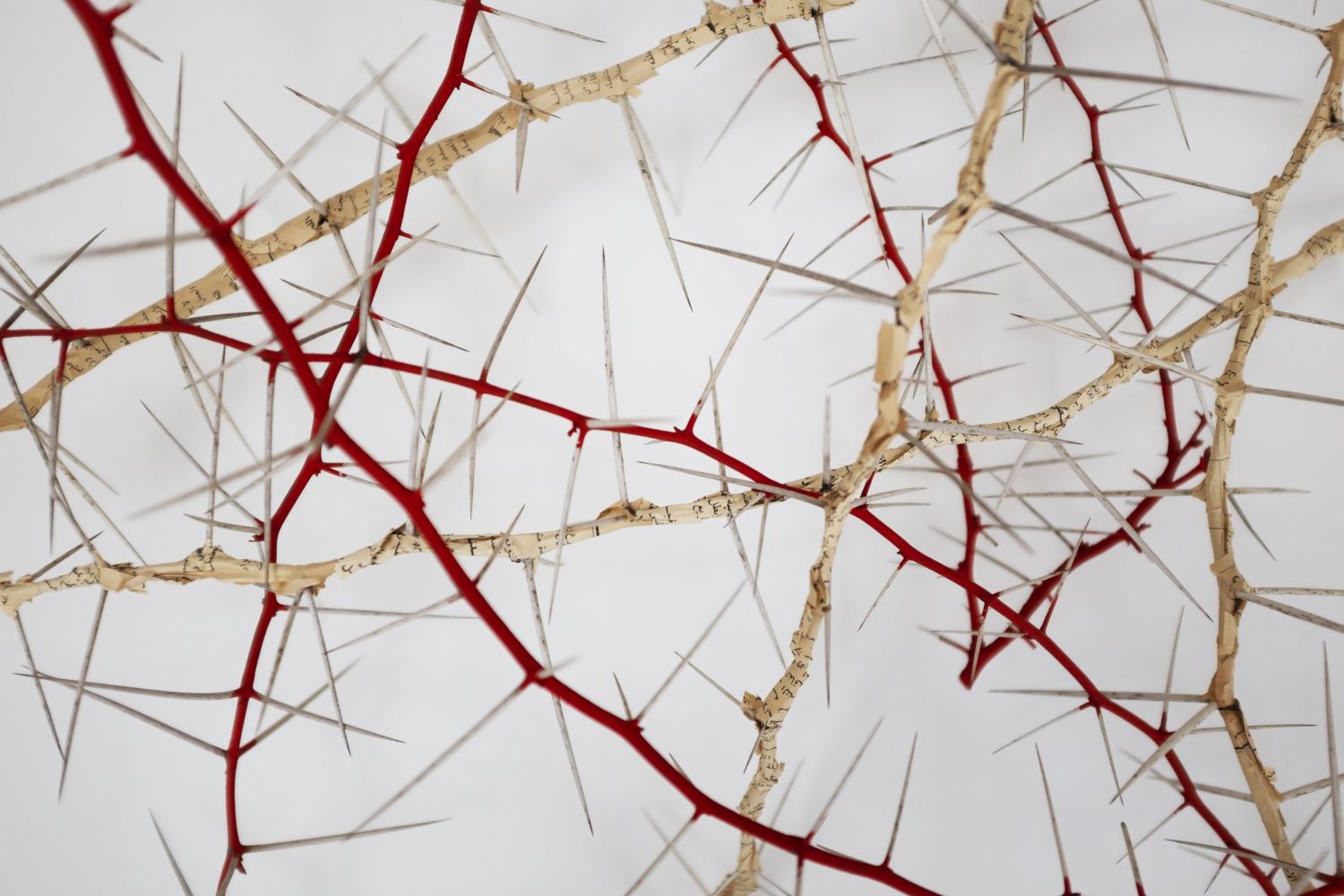
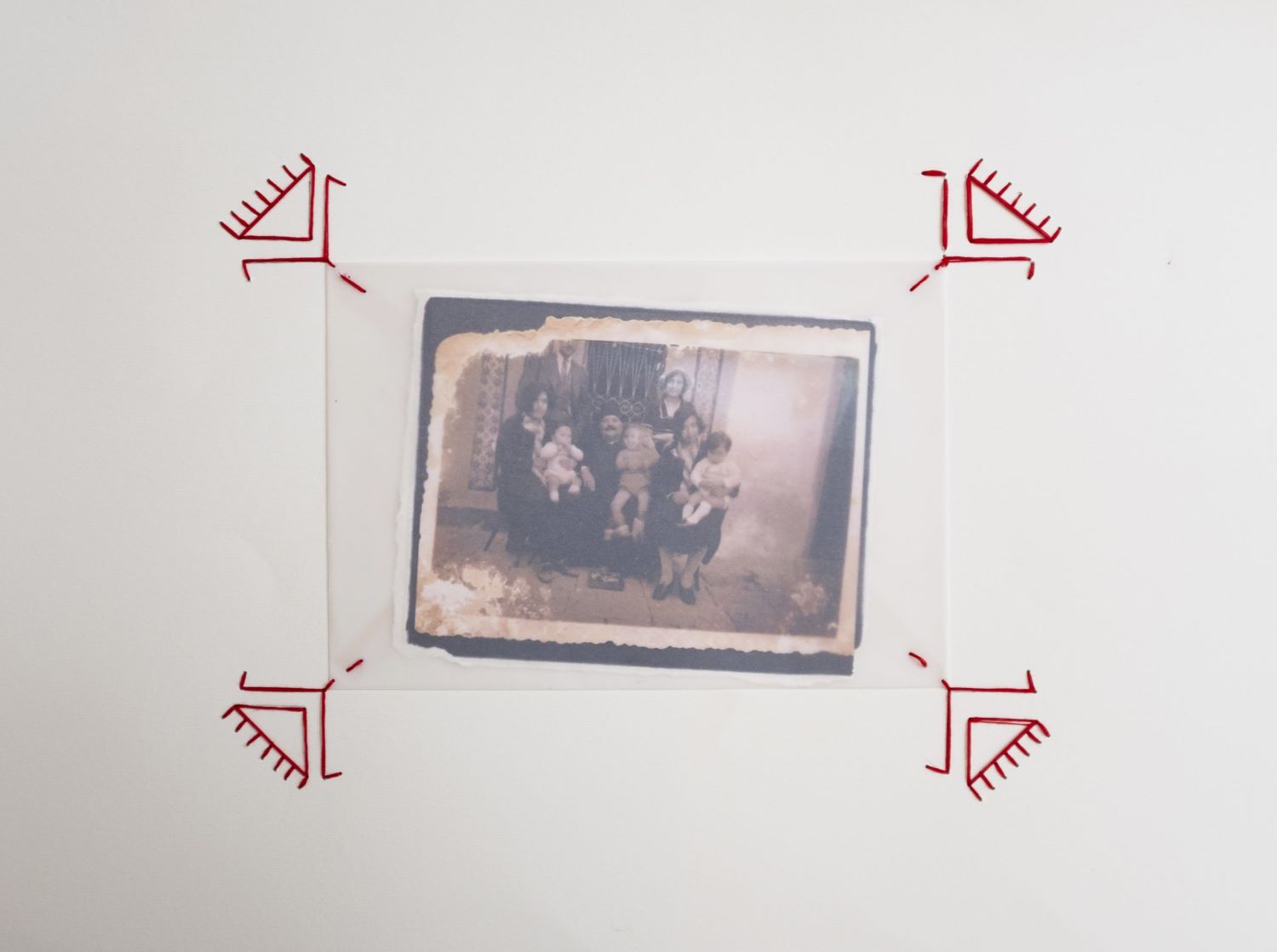
HA: For me, the message and subject always determines the medium, meaning that the medium comes after. For example, when I started using embroidery, I wanted to talk about time, fragility, and labour. Using red thread, I allude to an image of a bleeding thread that weaved history as time passes. As for memory, I used transparent paper for layering to give the sense of distant memories viewed afar while you are in their proximity, you see them through layers of time. I used family archives and mixed them with official archives, including letters, documents, and photographs to give an account of my History, which is derived from two different sources.
WA: Could you tell us more about the title of the exhibition, Love Letters.
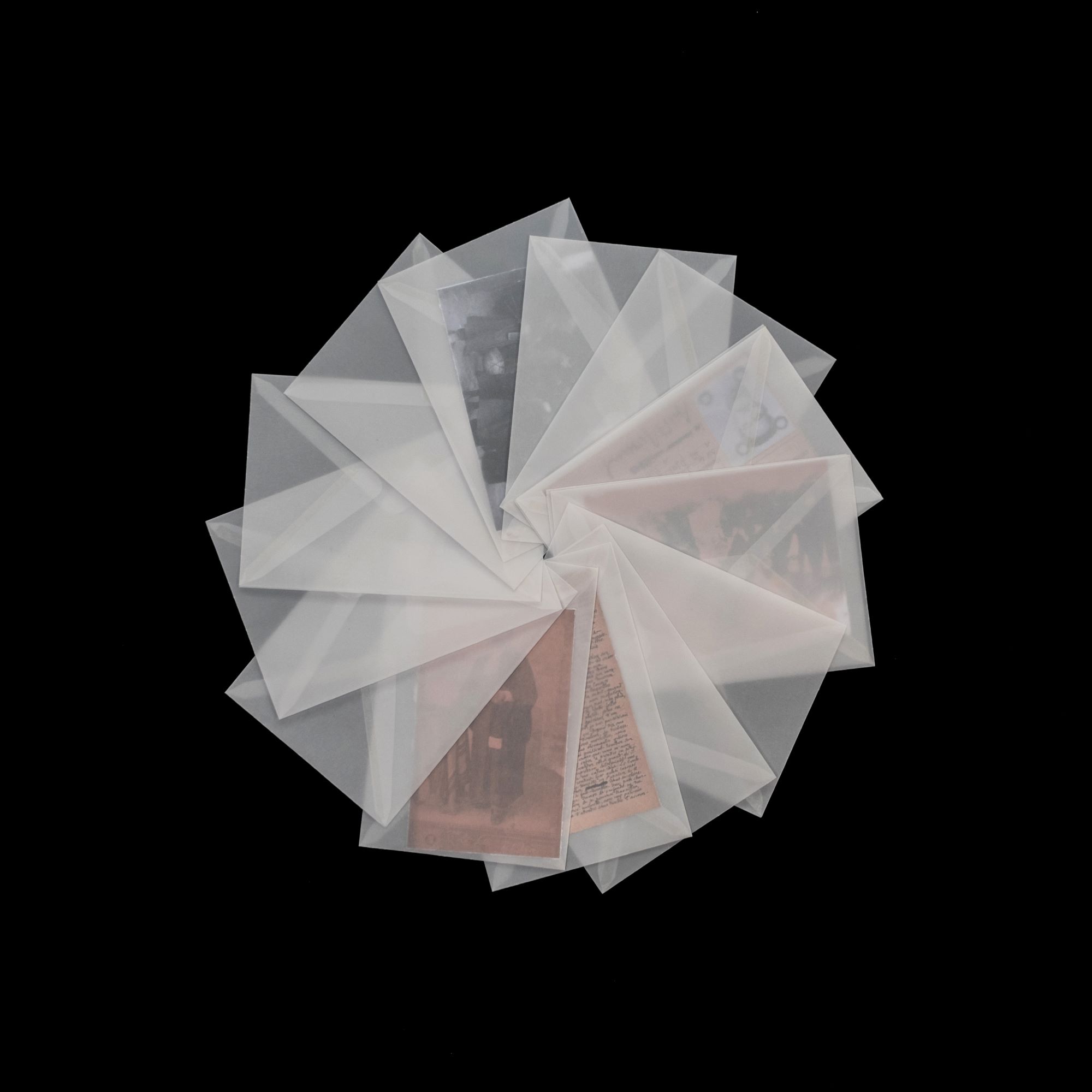
HA: First, I’m using letters and envelopes in the entire installation. Then, I imagined a correspondence between me, my grandfather, and grandmothers. But also, a correspondence between Tunisia and France. The Arabic word Tawassol means correspondence but also transmission and the whole exhibition is also about transmission of memory. Beside and this is kind of ironic, the exhibition is built on a love story, which is about my grandparents, but also a love and hate story between Tunisia and France. You know, this kind of double standards, which are the two faces of the same medal.
WA: Presently, how do you view this relationship between the two?
HA: The subject of the exhibition is rooted in the past. But it has many ramifications in the present. For example, the youth from Tunisia are talking about the colony as if they lived under it, calling sometimes French people as colonisers. This frustration is mostly poured into issues of migration and Islamophobia, meanwhile Europe and America are accused of imperialism and neo-colonialism. I guess we can trace these issues to the past and then talk about them in the present.
Building on that subject, I have a little video, called Why do you ask?, in which I explored the kind of relationship younger generations have with France. This project resulted from a six-month residency I did in a very poor neighbourhood in Medina in Tunis. And I collected answers to a question that was never asked, which is “why do you want to migrate and leave Tunisia?”. It’s a very short video, but it really answers the question and gives you an impression of what kind of relationship the youth have with France.

WA: In addition to being an artist, you also have a PhD in law. How do your two different backgrounds in visual arts and law manifest in your work?
HA: This is true, I have a PhD in law. I had a training in visual art at the same time as I was studying law. I had two careers for a long time. The link between these two was manifested when I worked on prisons and human rights in Tunisia. It was just after the revolution, and I was appointed as a lawyer in the Commission of Inquiry on violations and abuses committed during the revolution. Our task was to investigate what happened during the revolution. As part of my assignment, I visited all the prisons in Tunisia. A year after the publication of the report, I decided to give my testimony as a citizen and as an artist, not as a jurist, on what I saw and what I heard in prisons. As a result, I did an artwork titled Counfa (meaning Convoy) where I talked through a series of photographs and installations about the conditions of prisons in Tunisia. I also published a book called Corridors (2014) where I collected testimonies of prisoners accompanied by photos taken inside the prisons. For another project, we investigated the death row in Tunisia which resulted in a second publication that I co-authored called Siliana Syndrome (2013). I would say that my work is about margins and human rights, or at least freedoms, not only in Tunisia, but everywhere. I deal with social, political, and sometimes religious topics, starting from Tunisia–of course because this is where I live, and this is my reality–while also dealing with these issues globally.
WA: And finally, can you tell us about your upcoming projects that we can look forward to?
HA: I keep on working, as usual. But my upcoming project will be in Congo Biennial in Kinshasa in September of this year.
WA: Great, thank you Héla!
The exhibition runs from 23 April to 21 May 2022, at La La Lande Gallery in Paris. For more information, visit the Gallery’s website.